
Arrest History in Uvalde County
Uvalde County arrest records begin with the agency that made the arrest. The Uvalde County Sheriff’s Office handles arrests in its jurisdiction and operates the county jail. Uvalde Police and Sabinal Police keep reports for their own cases. Texas DPS troopers and Rangers retain state reports, UCISD Police holds school-district police records, and county constables keep records tied to their work. A person taken to the Uvalde County Jail gains a separate booking record even when another agency made the arrest.
No single search combines those Uvalde County arrest records. The jail file shows intake and custody. An agency report sets out what its officer saw or alleged. A later clerk file shows what prosecutors actually filed and how the court resolved it. DPS may receive a fingerprint-linked arrest cycle and later disposition, but reporting can lag. Start with the event being researched, then compare the booking, report, and court outcome rather than treating any one source as the whole arrest history.
Uvalde County Arrest Report Custodians
The report stays with its creator. That point prevents one of the most common Uvalde County arrest-search errors. A Sheriff’s Office request will not necessarily produce a Uvalde Police narrative, even if the person was booked at the county jail. For a city incident, use the city’s public-information process. Sabinal Police accepts requests through the department or City Secretary and publishes a $6 report-copy price. DPS and UCISD Police records also require requests to those agencies, not to the jail.
| Arresting agency | Records route | Contact or location |
|---|---|---|
| Uvalde County Sheriff | Written TPIA request and jail call | 339 King Fisher Lane; 830-278-4111 |
| Uvalde Police | City public-information form | City of Uvalde, 101 E. Main Street |
| Sabinal Police | Police or City Secretary | 501 N. Center Street; 830-988-2691 |
| Texas DPS | DPS public-information channel | Use the official DPS site |
| UCISD Police | District public-information officer | Use the official UCISD channel |
| County constable | Relevant precinct or county request | Confirm through the county directory |
The City of Uvalde’s official site identifies the city channel used for Uvalde Police records.
The city image marks the government source for UPD records, while the jail remains the source for the separate county booking sheet.
How to Look Up Uvalde County Arrests
Begin with the narrowest fact available: likely agency, arrest date, place, report number, or court cause number. Uvalde County has no official anonymous booking roster, so a complete arrest lookup depends on direct contact and follow-up. Use this sequence for a recent event, then shift to statewide channels when the question concerns an older Texas history or post-sentence custody.
- Call the Uvalde County Jail at 830-278-4111 for present custody. Ask for the booking number, listed charge, bond, arresting agency, and responsible court.
- Request the offense or arrest report from the agency that created it. Give a bounded date range, location, report number when known, and a clear description of the existing record.
- Check the District Clerk at 830-278-3918 for a filed felony or the County Clerk at 830-278-6614 for a Class A or B misdemeanor. Municipal and justice-court matters require separate checks.
- Use the Texas DPS Criminal History Conviction Name Search for the public statewide conviction and deferred-adjudication subset. For your own identity-based record, follow DPS FAST fingerprint-review instructions.
- If direct calls or indexes do not answer the question, send a written Texas Public Information Act request to the record creator. Keep proof of delivery and ask for electronic copies and a cost estimate.
The IdentoGO enrollment interface is the official appointment starting point for DPS FAST fingerprints.
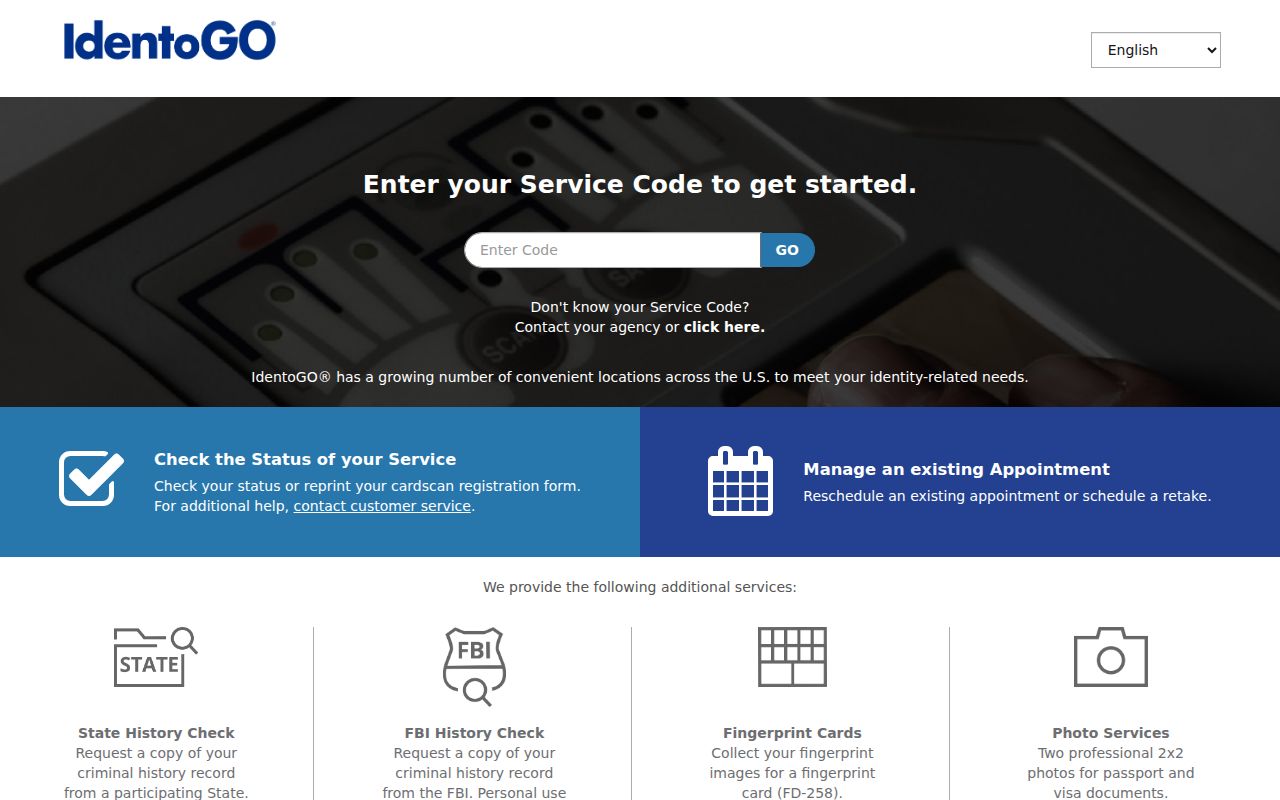
FAST is best suited to reviewing your own Texas criminal record; it is not a replacement for a jail call or an agency report request.
No Uvalde County Booking Roster
No official Uvalde County web jail roster, booking blotter, or sheriff app was located. Avoid unofficial roster pages and mugshot sites. For current custody, call the jail at 830-278-4111. For a durable booking record, request the booking sheet or releasable jail log in writing from the Sheriff at 339 King Fisher Lane, Box 1, Uvalde, TX 78801, or use sheriff@uvaldecounty.gov. The office publishes no separate records portal, local request form, base copy fee, fixed response time, or dedicated warrant search.
A written request should identify an existing record rather than ask the Sheriff to answer questions or create a report. Useful locators include the event date, place, agency, report or booking number, and a limited date range. Ask for electronic delivery where possible. The Texas Public Information Act allows redaction or withholding of protected details, including active-investigation material, juvenile data, victim identifiers, medical information, and confidential criminal-history data. If the Sheriff does not own the record, redirect the request to the arresting agency or clerk.
Uvalde County Sheriff and Jail
339 King Fisher Lane, Box 1
Uvalde, TX 78801
830-278-4111
sheriff@uvaldecounty.gov
Note: The county publishes no fixed records-counter hours, so call before making an in-person trip to request arrest or booking records.
What an Arrest Record Shows
A Uvalde County arrest file can contain many fields, but the public copy depends on the record and applicable restrictions. Agency reports may include a case number, time and place, officer, alleged offense, narrative, warrant basis, evidence, vehicle, and witness references. The booking file adds jail intake data. It may also associate a photograph and fingerprint transaction with the event, though Uvalde County does not publish a photo gallery or sample roster profile.
| Report or booking number | The identifier used by the arresting agency or jail to locate the event. |
|---|---|
| Date and time | When enforcement activity and jail intake occurred; the two times may differ. |
| Arresting agency | The office that created the arrest report and should receive the report request. |
| Charges and holds | Allegations or legal holds listed at intake, which prosecutors may later alter or reject. |
| Bond | The release security set for a charge, not the final result of the case. |
| Photo and fingerprints | Booking identifiers subject to the TPIA and confidentiality rules; no county photo roster was found. |
| Release or transfer | Custody status after release, transfer, or movement to another agency. |
Sensitive identifiers, victim and juvenile details, medical data, witness information, and active-investigation material may be removed. A public arrest record therefore should be read as a lawful release, not as the full internal file.
Uvalde County Booking’s First 48 Hours
Uvalde County booking at the Uvalde County Jail ordinarily involves identity checks, a property inventory, a photograph, LiveScan fingerprints, charge and hold entry, medical and mental-health screening, and classification. The fingerprints can link the arrest to a DPS tracking control number. Intake data reflects what jail staff receive at that stage. It does not show that a prosecutor accepted the same charge or that a court found guilt.
Texas Code of Criminal Procedure Article 15.17 requires an arrested person to be brought before a magistrate without needless delay, ordinarily within 48 hours. At magistration, the judicial officer gives required warnings and addresses probable cause, counsel, and bond. That early event is not a trial. A booking charge may later be rejected, amended, enhanced, or dismissed. For the filed charge and final outcome, check the appropriate clerk’s case file after prosecutors act.
The practical flow is: Arrest → Jail Booking → Magistration → Prosecutor Review → Filed Court Case or No Filing → Disposition.
Recent Arrests and Booking Logs
Because there is no official online Uvalde County booking log, the jail phone is the first source for present custody. Give a full name and, when appropriate, a date of birth to reduce same-name errors. Ask staff what can be confirmed by phone and how to obtain a releasable booking sheet. A phone answer is current only when given. It does not supply a lifetime arrest history, and a person’s absence from custody says nothing certain about an earlier arrest.
After release, the arrest trail can still exist with the agency, jail, clerk, and DPS. If a felony was filed, contact the 38th Judicial District Clerk. Use the County Clerk for Class A or B misdemeanor files, and check the Uvalde or Sabinal Municipal Court separately for fine-only city cases. The complete filed case, disposition, and sentence belong in Uvalde County criminal court case records, not in a live custody confirmation.
Uvalde County Arrests Reach Texas DPS
A reportable custodial arrest moves to the Texas DPS Computerized Criminal History system through fingerprints and a tracking control number. Prosecutors and courts later report their actions so the arrest cycle may show dismissal, deferred adjudication, conviction, acquittal, or another disposition. The updates are not instant. Rejected submissions, old paper files, spelling differences, and missing final reports can leave the statewide record behind the local clerk file.
Uvalde County reporting lag is visible in DPS’s January 2025 completeness report for 2023 DWI activity. At the report’s measurement point, Sabinal Police showed one arrest, one prosecution record, and one court disposition. Uvalde Police showed 39 arrests, 29 prosecution records, and 15 court dispositions. Those figures describe reporting stages, not guilt and not a crime rate. They show why researchers must verify a DPS entry against the originating Uvalde County court.
Arrests vs Convictions
An arrest and a conviction answer different questions. The arresting agency and jail document enforcement and custody. A court judgment records a legal result. The initial charge may never be filed, or it may change before judgment. Even a dismissal does not automatically remove every arrest or booking entry. Texas expunction under Chapter 55A applies only when statutory requirements are met, while some deferred cases may instead qualify for an order of nondisclosure.
| Arrest record | Conviction record |
|---|---|
| Created by an arresting agency and jail | Created through the court and clerk |
| Shows that enforcement and booking occurred | Shows a judgment or finding of guilt |
| Lives with the agency, Sheriff, and reporting systems | Lives in the clerk file and may reach DPS |
| Can be followed by release, no filing, dismissal, or acquittal | Can lead to sentence, supervision, appeal, or later relief |
Note: An arrest is not proof of guilt, and the filed court charge or final disposition may differ sharply from the booking entry.
When Uvalde County Arrest Custody Moves
The Uvalde County Jail stops being the main locator after a sentenced person transfers to state or federal custody. Texas VINE can supply custody alerts, while the TDCJ Online Inmate Search covers Texas prison and state-jail custody.
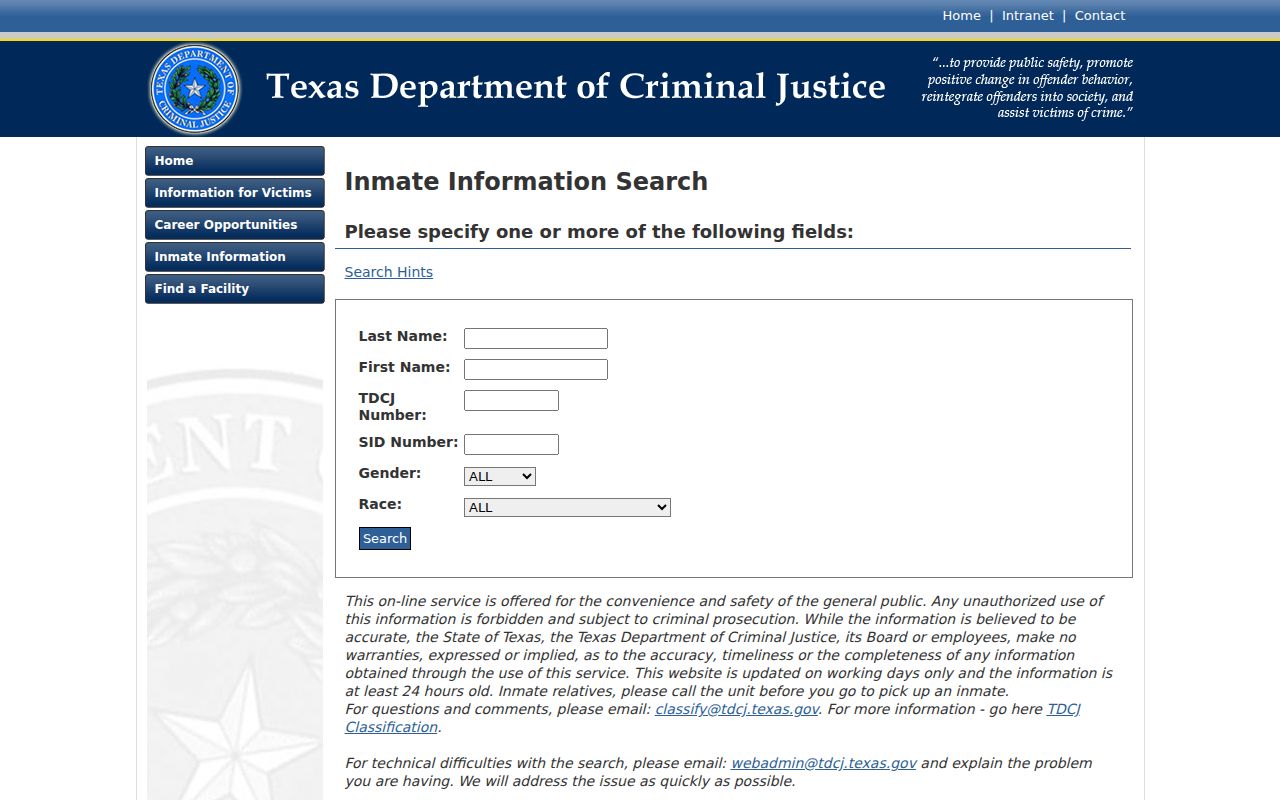
TDCJ accepts a last name with supporting first-name details, or an exact TDCJ or SID number, and may show the current unit, offense data, maximum sentence date, and projected release or parole dates. Those projections can change and are not substitutes for the judgment.
For federal custody, the Federal Bureau of Prisons inmate locator supplies the separate federal route.
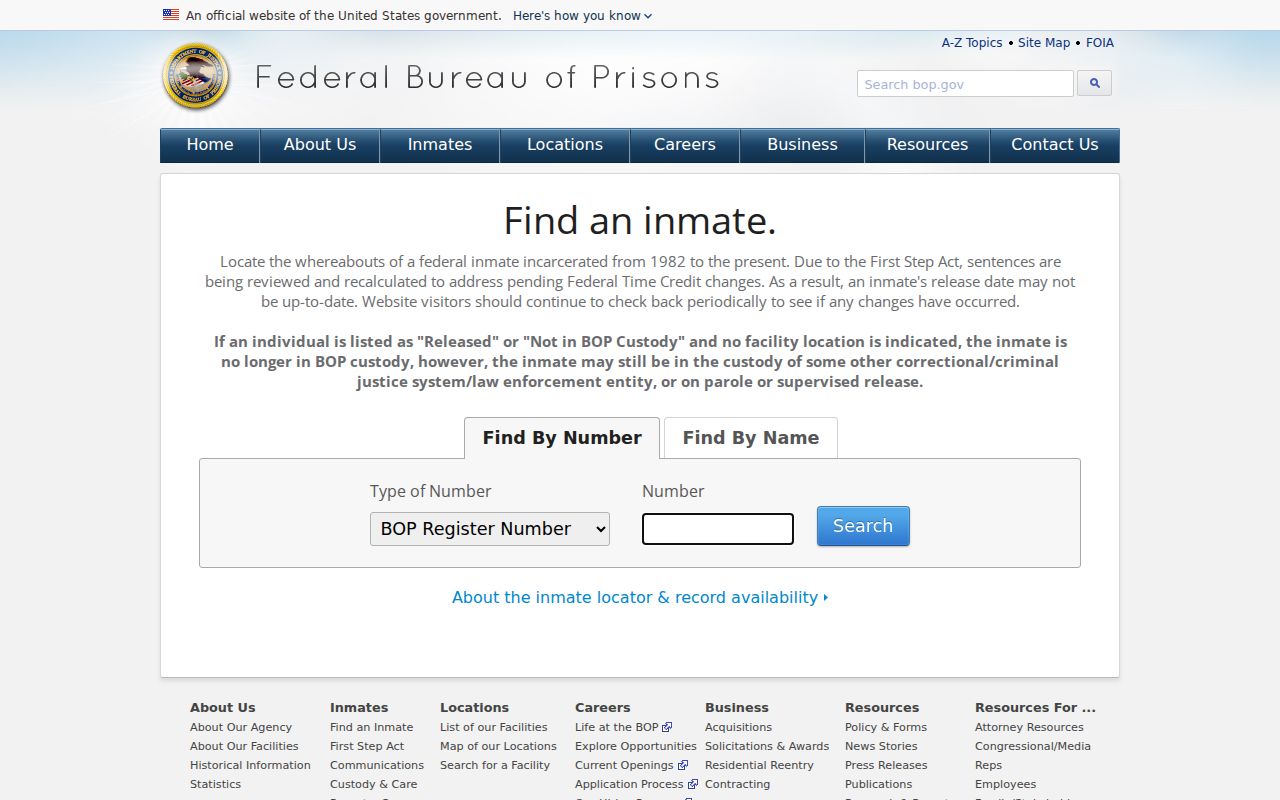
The federal locator uses a name or federal identifier and does not cover the Uvalde County Jail or TDCJ. Matching the custody system to the sentence prevents a false no-result conclusion.