
Criminal Cases in the Uvalde County Courts
Uvalde County criminal cases do not all sit behind one counter. The 38th Judicial District Court has original felony jurisdiction, and the District Clerk keeps those pleadings and docket papers. The constitutional Uvalde County Court hears Class A and Class B misdemeanors, whose files belong to the County Clerk. Justice courts hear fine-only matters within their authority. Uvalde and Sabinal municipal courts keep their own city Class C and ordinance cases. A citation can therefore exist without any District Clerk cause.
The cause number identifies the court file and should be saved whenever it appears. Names alone can produce uncertain matches, especially when dates of birth are absent from a public view. Start by identifying the level of the filed charge, not merely the arrest allegation. Then ask the correct Uvalde County clerk for the docket, charging instrument, and final judgment. If the charge was amended after arrest, the court file may use a different offense label than the booking record.
Match Uvalde Charges to Courts
The court split is the first trap in a Uvalde County case search. A felony accusation moves to the 38th District, while a Class A or B misdemeanor belongs at the County Clerk. Fine-only cases may remain with a justice court or one of the two municipal courts. The Texas Judicial Branch court-jurisdiction overview explains those levels, but the local clerks confirm where a particular cause was filed.
Fine-only Uvalde County records need another jurisdiction check. Justice of the Peace Precinct 1 can be reached at 830-278-3921, while Precinct 6 is at 339 King Fisher Lane and uses 830-278-8123. Uvalde Municipal Court keeps city citations, and Sabinal Municipal Court handles its city cases at 501 N. Center Street, 830-988-2630. Search the issuing court when a citation or capias never appears in a district or county index. That separate call can explain an apparent gap without treating silence from the felony clerk as a countywide no-record result.
| Charge level | Uvalde County record holder | Best first request |
|---|---|---|
| Felony | 38th District Clerk | Cause search, docket, indictment, judgment |
| Class A or B misdemeanor | Uvalde County Clerk | Docket, information, plea, judgment |
| Fine-only justice matter | Issuing justice court | Complaint, docket, warrant status, disposition |
| City Class C or ordinance case | Uvalde or Sabinal Municipal Court | Citation, docket, judgment |
A municipal citation should not be treated as a missing District Court record. It is a separate file held by a separate clerk. That fact also explains why a person-wide search through one office cannot certify that no other Uvalde County court case exists.
How to Search Case Records
Texas has no single free statewide trial-court person search. re:SearchTX offers electronic access after registration, yet Uvalde County coverage, document availability, role permissions, and fees can vary. Use it as a discovery tool, then verify the docket and result with the local clerk. A known cause number is stronger than a broad name search.
- Decide whether the Uvalde County charge is a felony, county misdemeanor, justice matter, or municipal citation.
- Call the matching clerk and ask whether the office offers a name or cause-number search for that file class.
- Register with re:SearchTX and search by person or cause number, applying court, location, date, and category filters.
- Open the docket and note the court, status, charge, hearing entries, disposition, and linked document access.
- Request the charging paper and final order from the clerk, asking for certification when an official copy is needed.
| Field Label | Type | Required | Notes |
|---|---|---|---|
| Person or business | Text search | Route dependent | Use the full legal name and test likely variants. |
| Case number | Text search | Alternative | Best route when the exact Uvalde County cause is known. |
| Court or location | Filter | No | Narrow to the relevant local court or county. |
| Date range | Date filter | No | Limit results by filing period. |
| Case category | Selection | No | Choose the criminal category when available. |
Search results can show only part of a Uvalde County case. A document icon may still require payment or role verification, and older records may not be online. The clerk's file controls when the platform is silent or incomplete.
Two Uvalde Felony Courtrooms
A docket notice may place a felony event at either the historic courthouse or the Justice Center. The official 38th District local rules and orders describe why. The courthouse courtroom seats as many as 180 people, so jury selection usually starts there when the standard pool exceeds 100. The Justice Center courtroom seats 87 but offers stronger acoustics, a secure adjacent jury room, and better separation of participants.
The linked 38th District orders page also supplied the local-rules image used here.
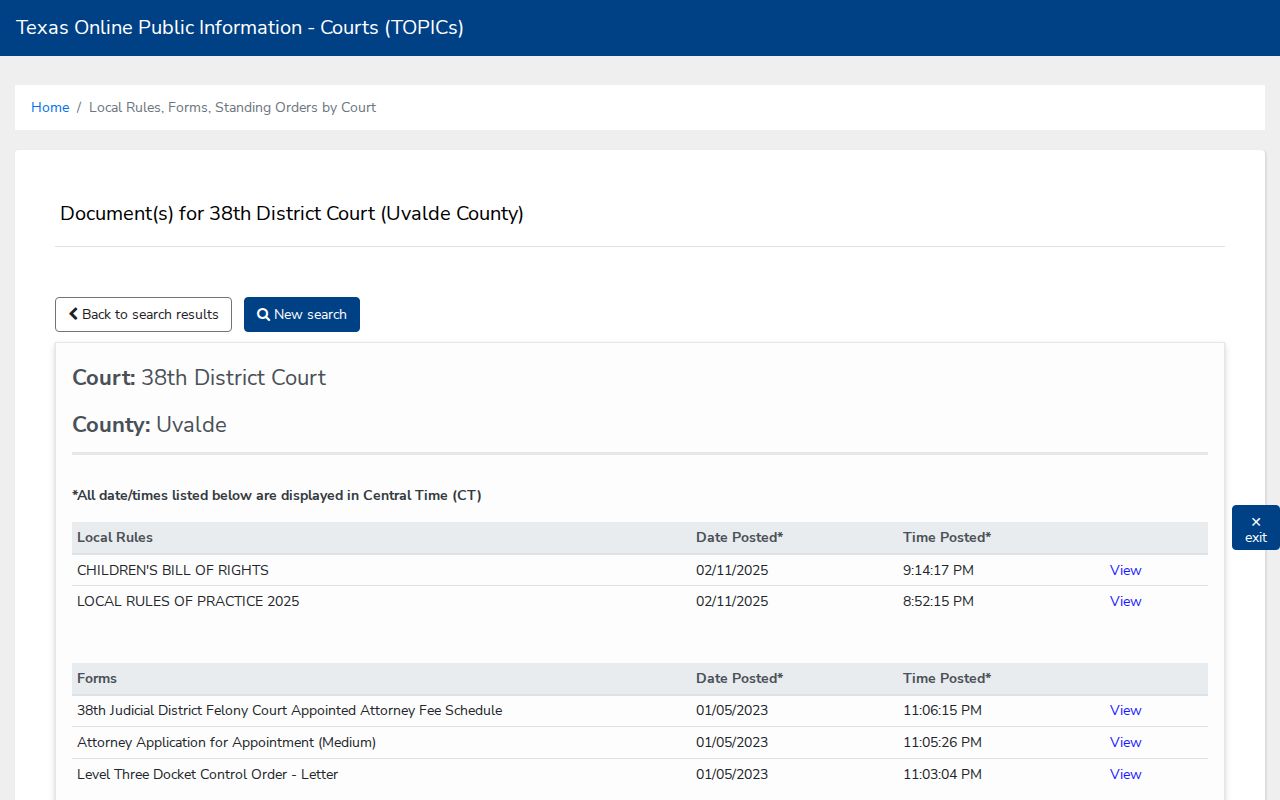
Those physical limits explain why a Uvalde County criminal case may start jury selection at Courthouse Square and later move to King Fisher Lane. Confirm the setting with the District Clerk or court coordinator before traveling. The court location does not change which clerk holds the felony file.
What the Case File Shows
A Uvalde County court file centers on the filed cause, not the initial jail intake. It may identify the court and judge, parties, charge, attorneys, settings, docket events, bond, orders, judgment, sentence, costs, and appeal notices. The charging document matters because it states what prosecutors actually pursued. The final judgment or dismissal order is the best record of the outcome.
| Cause Number & Court | Identifies the distinct file, court level, and local custodian. |
|---|---|
| Charging Document | Shows the filed complaint, information, or indictment and the alleged offense. |
| Docket Entries | Chronological register of filings, hearings, motions, pleas, and orders. |
| Hearing Details | Lists available dates, times, and either Uvalde County courtroom location. |
| Disposition & Judgment | Records dismissal, acquittal, deferred adjudication, conviction, or another result. |
| Sentence & Conditions | States the court-ordered consequence, costs, and community-supervision terms when public. |
Public copies omit confidential identifiers and protected victim data. The docket is an index of activity, not always the full text of each paper. Ask for the judgment, dismissal order, or other signed disposition rather than relying on a brief docket label.
Read Uvalde Court Dispositions
Similar-looking docket terms can describe very different outcomes. A dismissal ends the charge without a conviction. An acquittal is a not-guilty determination. A no-bill means the grand jury declined to indict, while a true bill is an indictment. Deferred adjudication places a person on community supervision before a finding of guilt and may end without a conviction if completed, but it is not the same as an acquittal or expunction.
- Disposition
- The recorded outcome of a specific charge.
- Arraignment
- The formal presentation of the accusation and plea.
- Capias
- A court writ that orders an arrest.
- Judgment
- The signed court record of the decision and sentence when applicable.
The joint Medina, Real, and Uvalde supervision structure may appear after a community-supervision sentence. The official CSCD directory documents that service area.
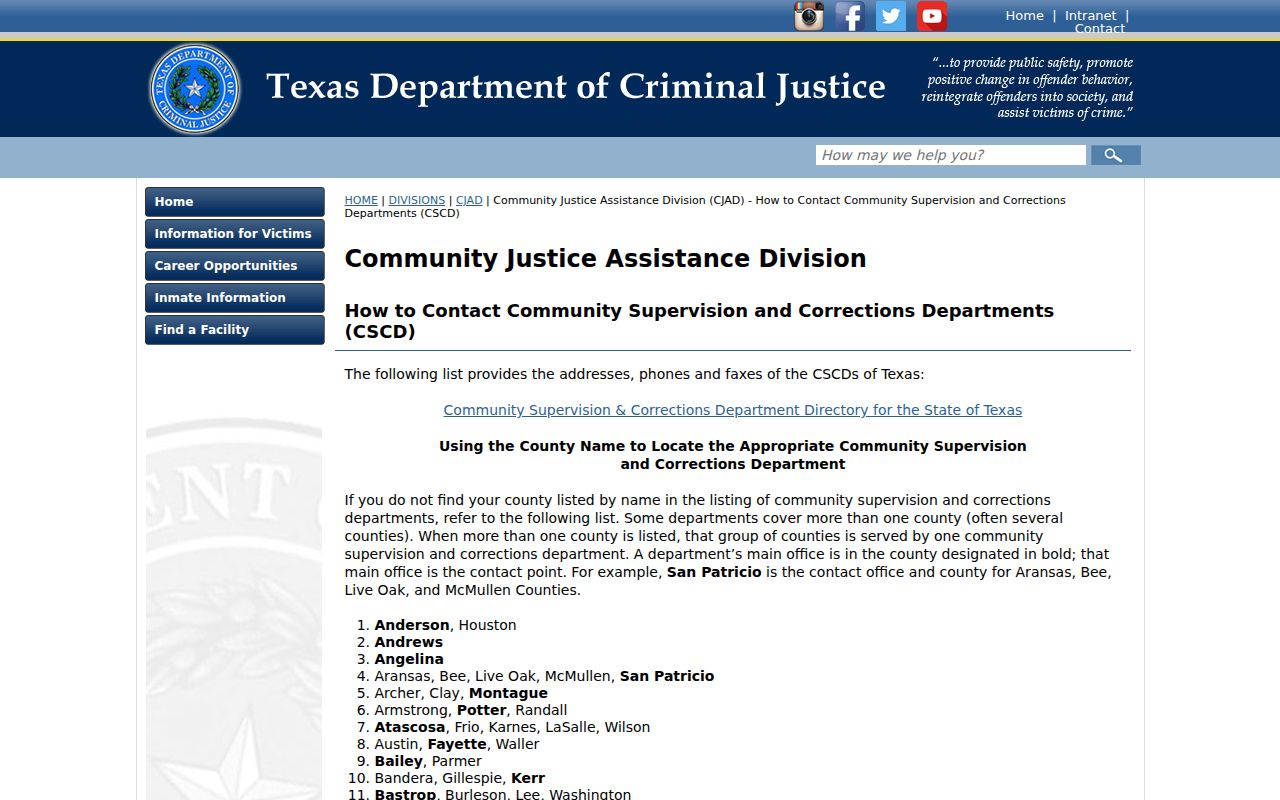
The directory helps identify the supervising department, but the Uvalde County judgment remains the key source for what the court ordered.
Stages of a Criminal Case
Once prosecutors file a charge, the Uvalde County cause moves through formal court events. Arraignment presents the accusation and records a plea. Pretrial work can include discovery, motions, bond questions, and settings. The case can resolve through dismissal, plea, or trial. A conviction proceeds to judgment and sentence; an acquittal ends the prosecuted charge. Appeal notices and later orders remain part of the clerk's record.
Case flow: Charges Filed › Arraignment › Pretrial › Plea or Trial › Disposition › Sentencing
Timing cannot be predicted from a generic sequence. Court schedules, motions, discovery, competency questions, plea talks, and trial settings can change the pace. Follow the actual Uvalde County docket and confirm the next setting with the clerk.
Certified Uvalde Judgments
An online docket can help locate a cause, but it may not supply an official outcome. Ask the District Clerk for a certified felony judgment or the County Clerk for a certified Class A or B misdemeanor judgment. For a city citation, request the disposition from the municipal clerk. Uvalde County copy and certification charges were not confirmed in the research, so call the office before sending payment.
The Uvalde Municipal Court search accepts a citation number and can locate a known ticket.
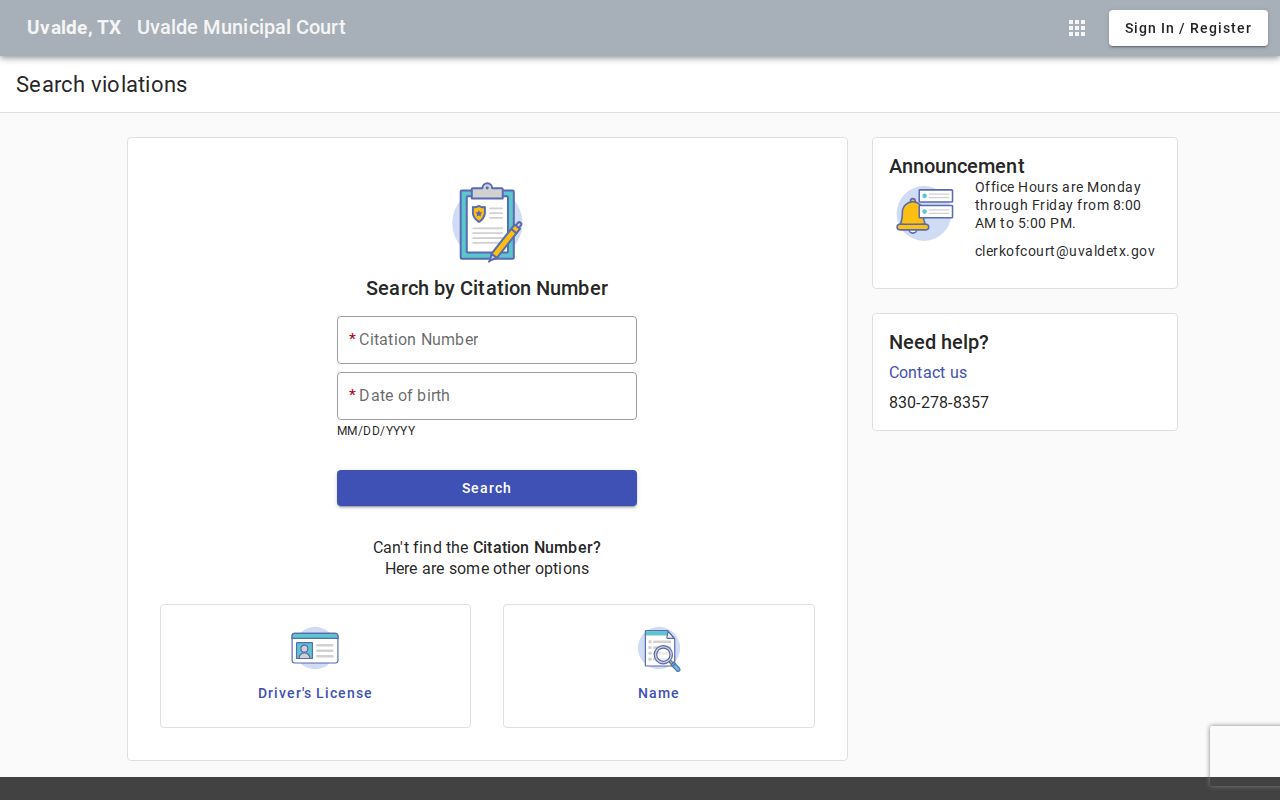
That city tool is not a broad Uvalde County criminal case search. If its payment view lacks the signed result, obtain the certified disposition from the municipal clerk.
Access & Restrictions
Texas Government Code Chapter 552 generally makes public information available unless an exception or another confidentiality law applies. That rule does not open sealed causes, confidential juvenile records, protected victim or minor details, Social Security numbers, or records covered by an expunction or nondisclosure order. Online access may be narrower than access to a releasable clerk copy.
When no case appears, verify the court level, spelling, cause number, and filing date. Then ask the clerk whether the record is older, paper-only, sealed, or held by another Uvalde County court. District Court minutes from 1857 through 1912 survive on Texas State Library microfilm, which can assist historical research beyond modern portal coverage.
The FBI personal-history ordering portal supplied the following captured image.
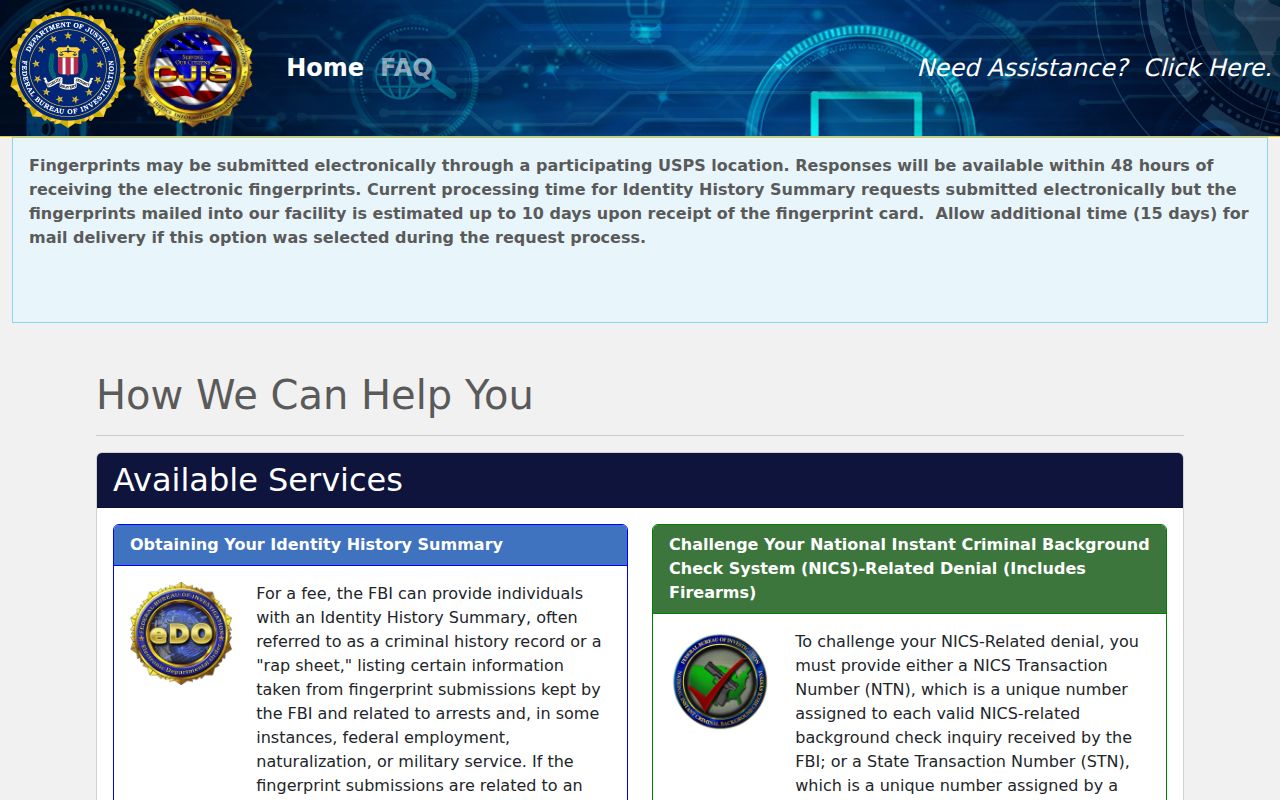
An FBI identity summary is a subject-only history product, not a replacement for a certified Uvalde County judgment or local docket.
Federal Cases From Uvalde County
Federal prosecutions arising in Uvalde County belong to the U.S. District Court for the Western District of Texas, not the 38th District Court. The systems and cause numbers are separate. PACER provides federal docket sheets and documents after account registration, generally charging ten cents per page under its current schedule, with a document cap and quarterly waiver policy.
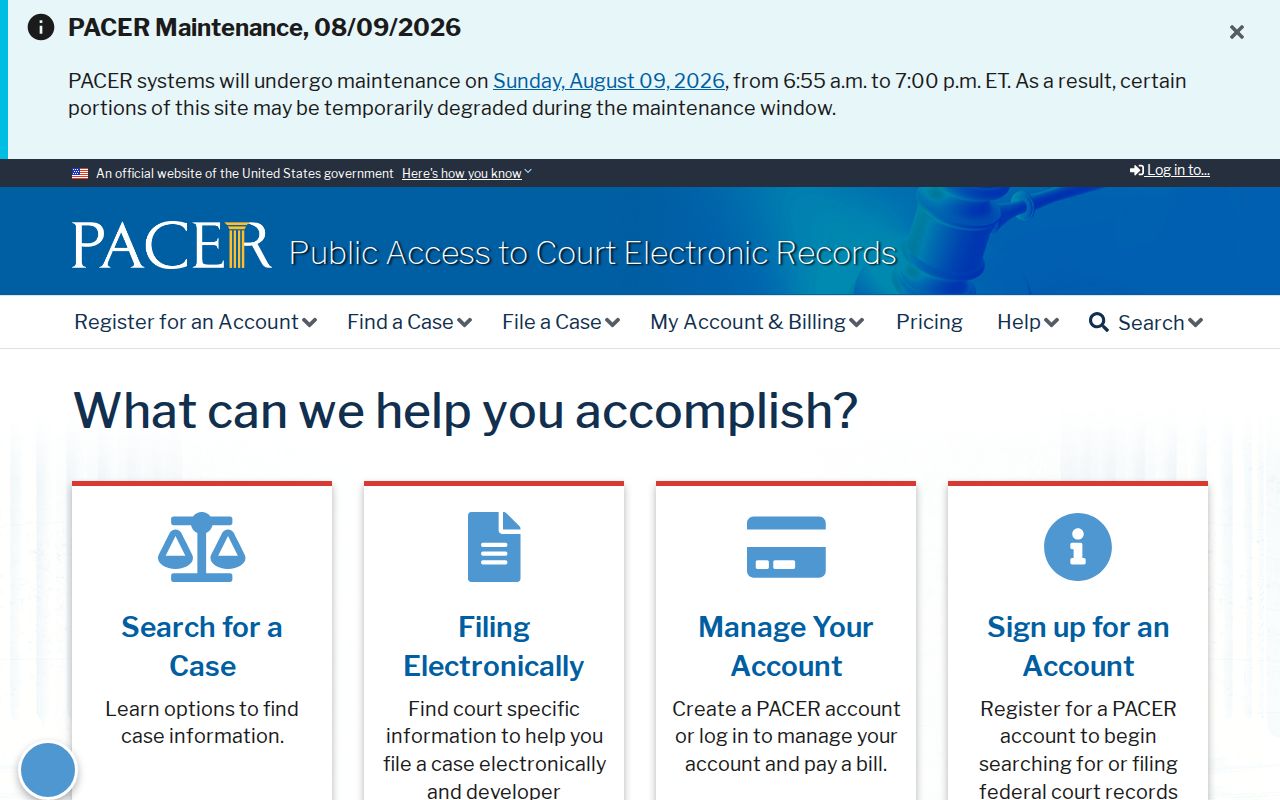
This federal gateway should be used only when the case is in federal court. It will not locate Uvalde County felony, misdemeanor, justice, or municipal files. The local clerk remains authoritative for those records.