
Running a Sex Offender Check in Uvalde County
The Texas Public Sex Offender Registry is the primary public lookup for Uvalde County. Texas DPS operates the statewide database under Code of Criminal Procedure Chapter 62. Local law enforcement registers people, records qualifying changes, performs required verification work, gives community or school notice when the law calls for it, and sends authorized data to DPS. The state search can be filtered by county, city, address, name, identifier, or map route, depending on the selected search tab.
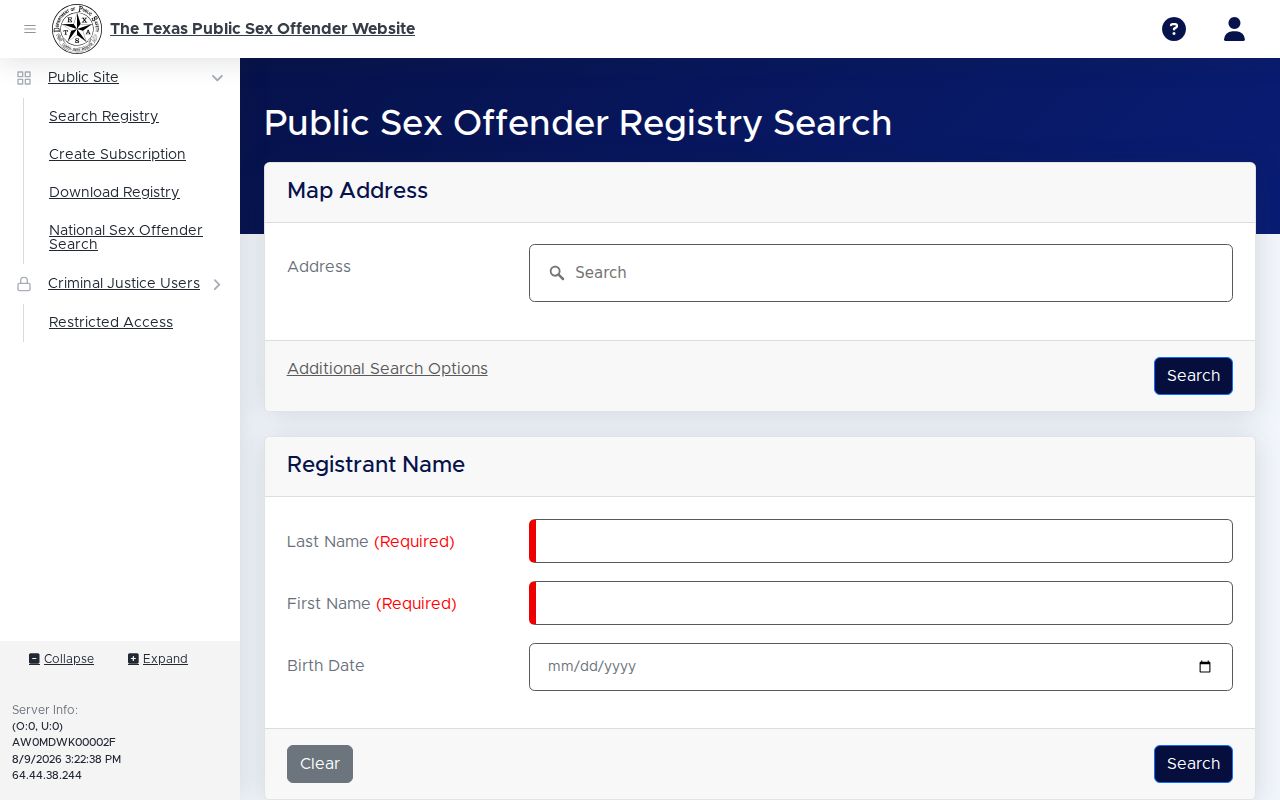
The registry interface is the right starting point for current public profiles, but local confirmation still matters when an address or status appears wrong.
Uvalde County does not publish a separate sheriff registry page, local map, appointment calendar, registration fee, or dedicated registration-office hours. Confirm the main department contact through the official Sheriff page, then call 830-278-4111 before appearing. People living within a city may register through city police when Chapter 62 assigns that authority. The City of Uvalde site is the official route to city departments, so the address alone should not be used to guess the responsible office.
Who Verifies Uvalde County Registrants?
The primary Uvalde County registration authority depends on where the registrant lives and the assignment required by Texas law. In an unincorporated part of Uvalde County, the Sheriff is the logical first call. A resident within Uvalde or Sabinal may fall under a city police department. Confirm the Uvalde County office before traveling because no county source publishes a universal local intake schedule. The authority can verify what the law permits, accept required updates, and investigate a suspected failure to report a move or other required fact.
Uvalde County Sheriff
339 King Fisher Lane
Uvalde, TX 78801
830-278-4111
Call to confirm authority and hours.
Sabinal Police
501 N. Center Street
Sabinal, TX 78881
830-988-2691
Confirm city registration responsibility.
The Sabinal public-information custodian page documents the city records contact used when a releasable city record must be requested.
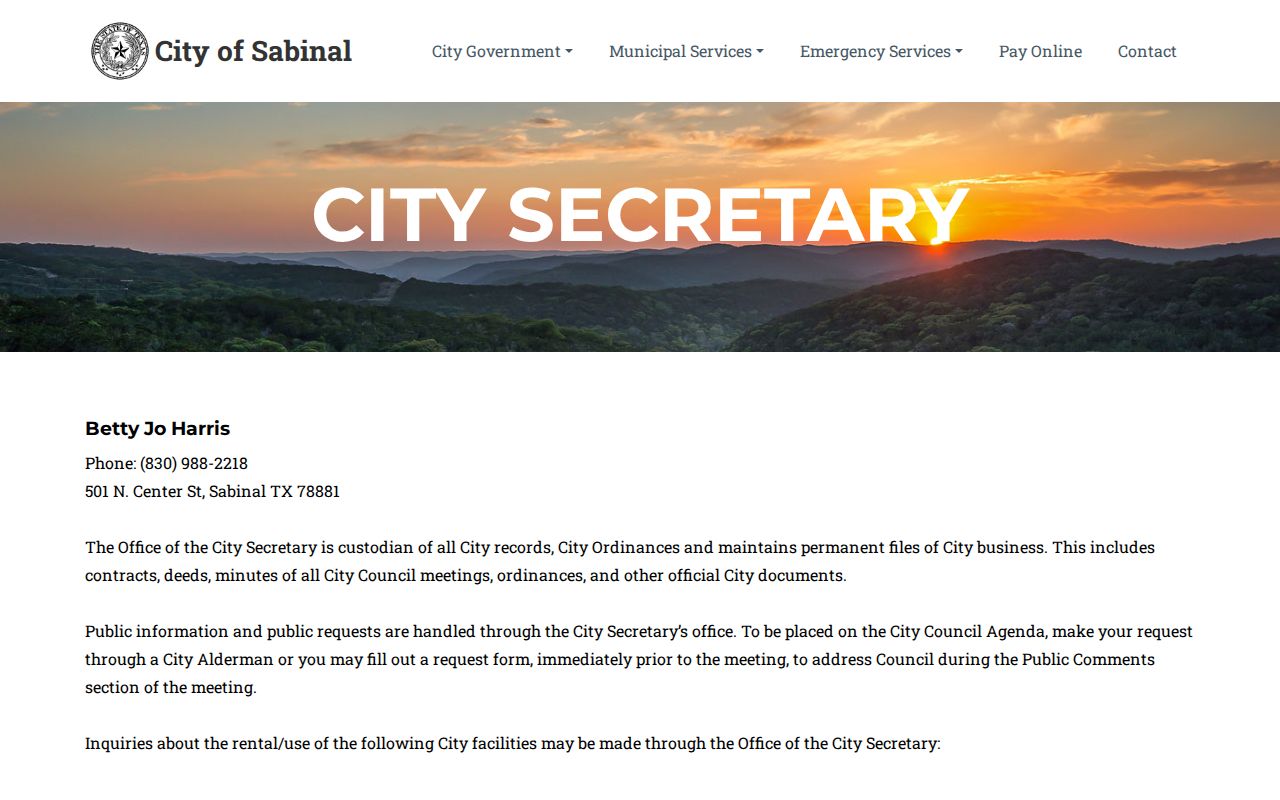
This city channel does not replace the DPS registry. It helps route a precise request to the local office that owns the record.
Searching the Texas Public Sex Offender Registry
Select the Uvalde County search route that fits the known facts. A name search works best when the legal name is known. County, city, ZIP, address, radius, or map tools are better for location awareness. Use only reliable fields at first. Too many uncertain filters can hide a valid result. Then compare the Uvalde County profile rather than assuming two people with the same name are the same person.
- Open the DPS registry and accept any current terms or notices presented by the official search.
- Choose name, address or city, county, identifier, or map search. Select Uvalde County when using the county route.
- Review candidate results with the photo, physical description, address, and offense information. Do not rely on a name by itself.
- Open the full profile and note current status, primary address, registration information, and the latest verification details that DPS makes public.
- Use NSOPW when another state may matter, and call the responsible local authority about a possible Uvalde County discrepancy.
| Field label | Type | Required | Notes |
|---|---|---|---|
| Search type | Tabs or menu | Yes | Name, location, map, identifier, or popular-search route |
| Last Name | Text | Route dependent | Use a reliable legal surname |
| First Name | Text | No | Narrows same-surname results |
| Address | Text | Address route | Street or location input |
| City or ZIP | Text or dropdown | Location route | Use Uvalde, Sabinal, 78801, or 78881 as applicable |
| County | Dropdown | No | Select Uvalde for a county-wide result |
| Radius or map | Map control | No | Available distances are set dynamically by the live interface |
| SID or identifier | Text | Identifier route | Use an exact state identifier when known |
| Current Only or Primary Only | Checkbox | No | Filters current or primary addresses |
Uvalde County Registry Search Gaps
A Uvalde County no-result response is not always the final answer. Spelling differences, a recent move, registration lag, another jurisdiction, nonpublic juvenile treatment, or an overly narrow filter can affect results. Clear uncertain fields and try the surname or county route again. Then search the address or map view. If another state is relevant, move to the national government search. Do not use a commercial people-finder as a substitute for an official registry.
When a profile appears but the Uvalde County address looks wrong, preserve the profile identifier and record the observed discrepancy without confronting the person. Call the Sheriff or primary city registration authority. Law enforcement can compare the report with nonpublic records and determine whether investigation or a registry update is needed. Public users cannot see all verification material, so an apparent mismatch should be reported as a concern, not announced as a proven violation.
Note: A carefully broadened second search is safer than treating one narrow no-result screen as proof that no registration record exists.
What a Registry Profile Shows
A Uvalde County public profile joins identification, location, offense, and registration data so users can distinguish candidates. DPS can publish a name, aliases, photograph, date of birth or age, physical description, address, status, offense statute and description, conviction or adjudication date, and selected supervision information. Depending on Chapter 62, a profile may also include scars, marks, tattoos, vehicle data, higher-education information, and a victim age or sex category that does not identify the victim.
| Name and aliases | Public identity labels used to distinguish similar results. |
|---|---|
| Photo and description | Image, sex, race, age, height, weight, hair, eyes, and permitted marks or tattoos. |
| Registered address | Primary or other public location information and current-address indicators. |
| Offense and statute | Reportable offense, legal citation, and conviction or adjudication date. |
| Registration duration | Lifetime, ten-year, or juvenile-order treatment based on the offense and law. |
| Status information | Registration or verification information DPS is authorized to make public. |
The public view does not disclose Social Security or driver-license numbers, phone numbers, online identifiers, employer contact details, victim-identifying information, or added DPS-only fields. A juvenile court may make juvenile registration nonpublic. Those exclusions protect people and do not signal a broken Uvalde County profile.
Uvalde County Registry Across States
The Texas registry is strongest for Texas records. The National Sex Offender Public Website, operated by the U.S. Department of Justice, adds a cross-state layer when a person recently moved or an earlier address lies outside Texas.
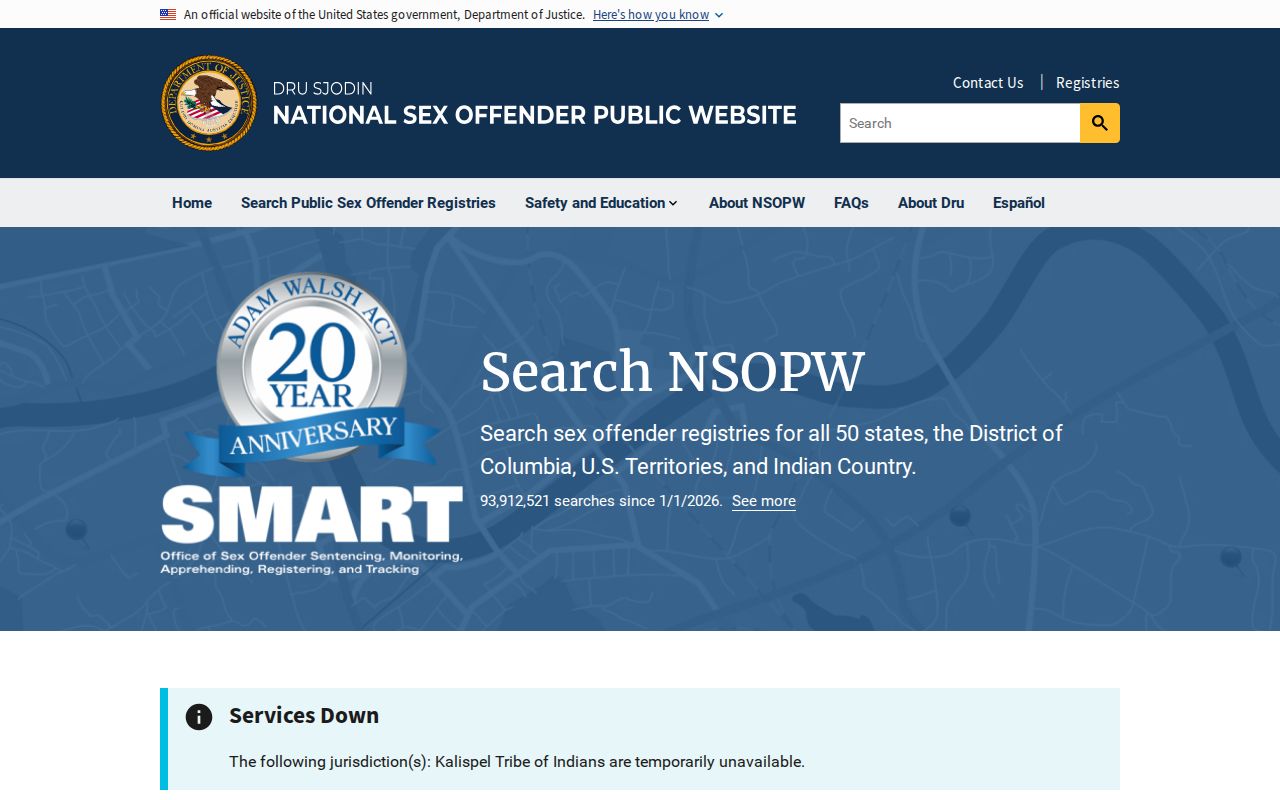
NSOPW searches participating jurisdictions but may require terms acceptance or CAPTCHA. It should supplement the Texas profile and local call, not override either source.
Use the same cautious matching method on both systems. Compare the photograph, physical traits, address history, offense details, and status fields that are lawfully shown. Search variation is useful, but copying or circulating private details beyond a real safety need increases the risk of mistaken identity and misuse.
Registration Requirements and Levels in Texas
Texas does not organize Uvalde County registry records around a simple federal Tier I, II, and III label. Duration depends on the offense and Chapter 62. Some enumerated offenses and repeat-reportable circumstances require lifetime registration. Other reportable offenses generally require registration for ten years after discharge from incarceration, parole, or community supervision as the statute defines it. Juvenile cases depend on the offense and court order and can involve exemption, deferral, or nonpublic status.
| Texas duration | General rule | Public meaning |
|---|---|---|
| Lifetime | Enumerated sexually violent and other Chapter 62 offenses, plus certain repeat circumstances | The duty continues for life unless lawful relief changes it |
| Ten years after supervision | Reportable offenses not assigned lifetime registration | The clock follows discharge as Chapter 62 defines it |
| Juvenile treatment | Offense and court-order dependent | Registration may be exempted, deferred, or nonpublic |
Verification frequency also follows the person’s legal category and registration instructions; the research does not support publishing one universal Uvalde County check-in schedule. The responsible local authority can explain the current requirement to the registrant. Public users should rely on the profile status and report a possible lapse rather than attempt to calculate compliance from a tier label Texas does not use.
Uvalde County Registry Notifications
DPS describes mailed postcard notice when a high-risk registrant or civilly committed sexually violent predator moves into an Uvalde County community. Local authorities may also notify schools when Chapter 62 requires it and may publish permitted information. These Uvalde County notices are a focused safety measure, not a substitute for checking the public registry when a person or address is of concern. A neighborhood search can change as addresses and registration status change.
The DPS registration and community-notification program page explains the statewide framework.
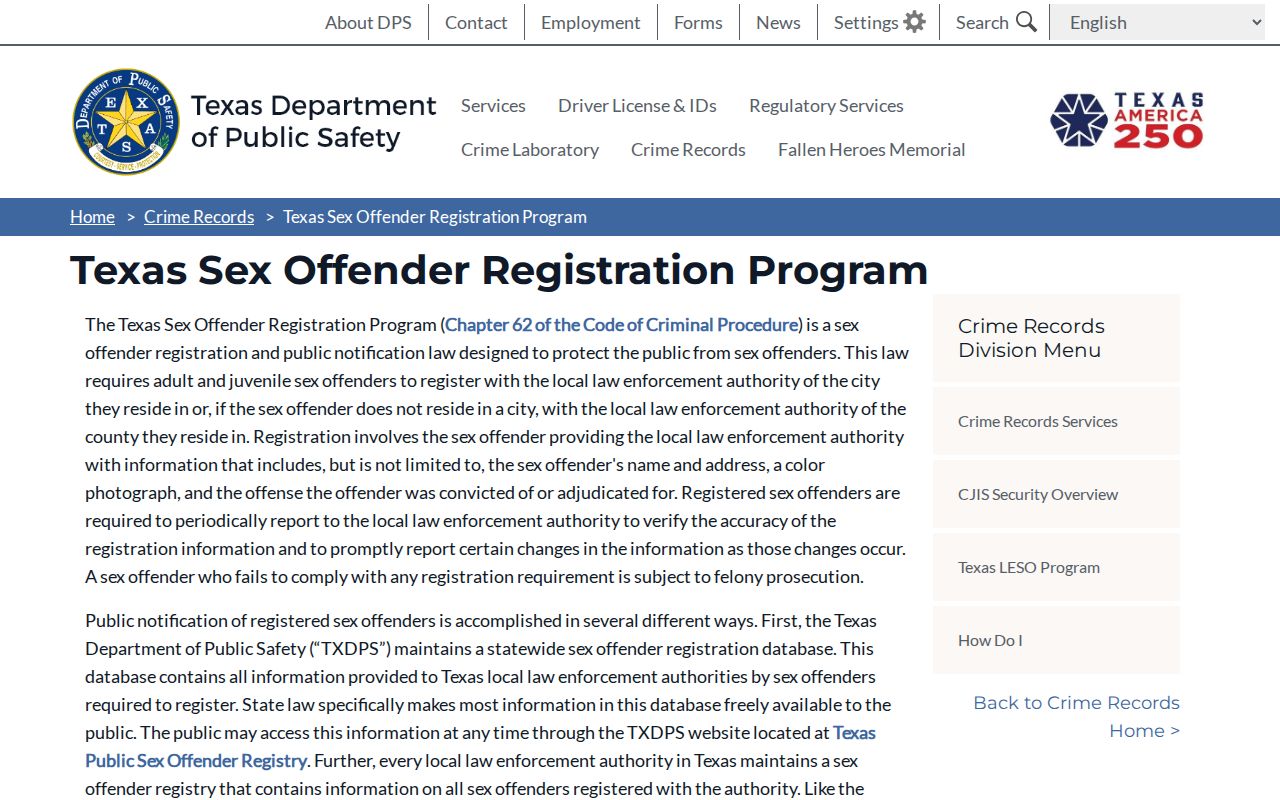
The program source helps readers understand why a local notice and the statewide public profile can contain different pieces of authorized information.
Lawful Use and Community Notification
Registry access exists for protection and awareness. Use a Uvalde County result to make sound personal and family safety plans, learn which law-enforcement office to contact, and report a factual address or compliance concern. Do not trespass, threaten, shame, follow, or confront a registrant or anyone in the household. A public listing gives no private person authority to enforce registration duties.
Misuse can lead to criminal charges: Texas Code of Criminal Procedure Chapter 62 governs registry disclosure and duties. Registry information does not authorize threats, harassment, intimidation, trespass, or vigilantism, and such acts may be prosecuted under Texas law.
Share a suspected Uvalde County violation with the Sheriff or the assigned city police authority. Include the DPS profile identifier and the specific observed mismatch. Let the agency assess legal duties and evidence. That process protects the public while reducing the chance of harm to the wrong person.